What should you do on day one?
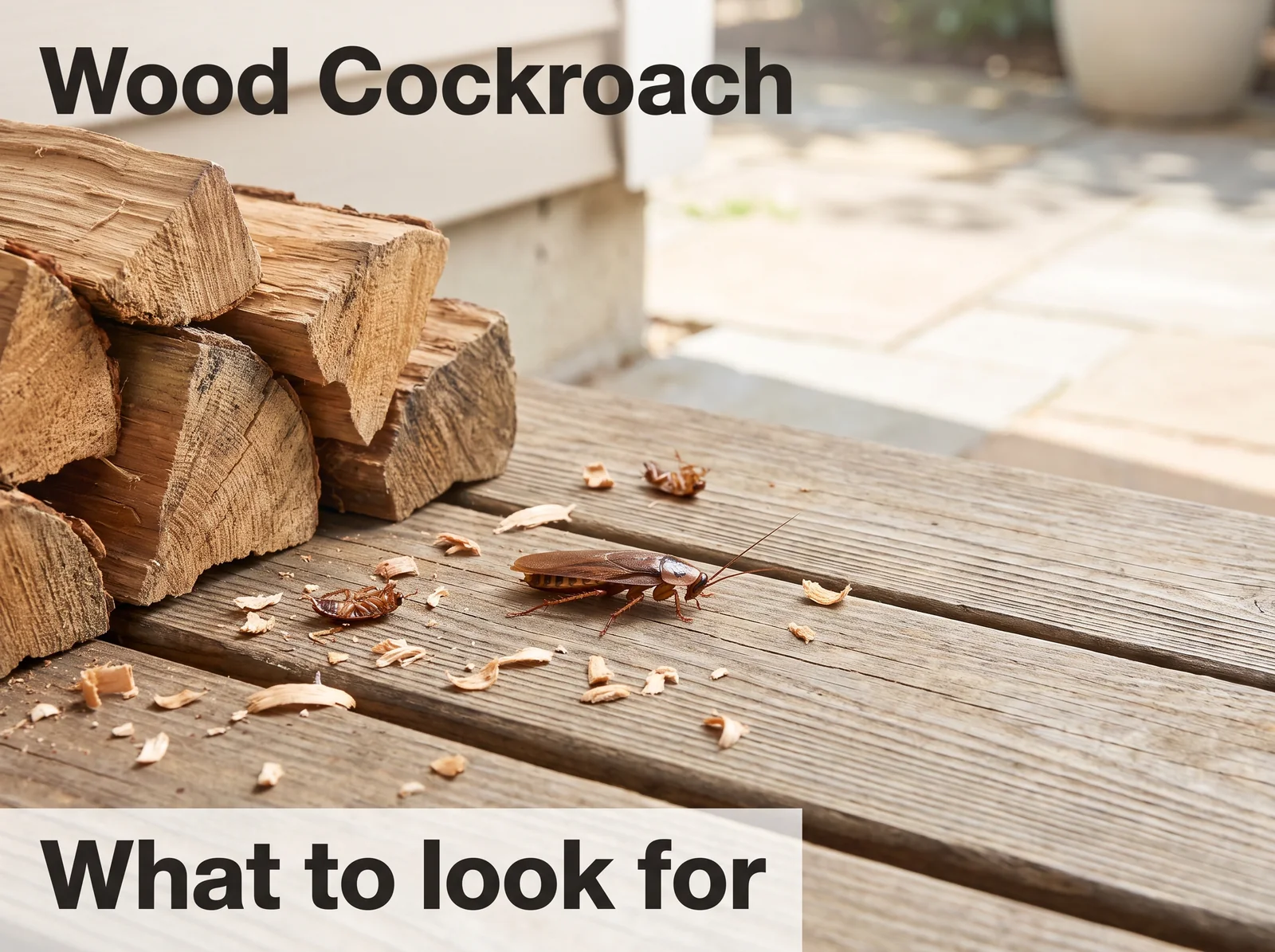
The first day matters most because it's when you gather information instead of guessing. Walk through your home and note exactly where you saw the roach: near a door, a window, a fireplace, or a woodpile stacked against the house.
Check if it's one insect or several. A single wood cockroach near an entry point is common and doesn't mean you have an infestation. Several sightings in the same room over a few days points to a nearby source that needs attention.
Seal any obvious gaps you can spot right away, like a torn window screen or a gap under a door. This won't solve everything, but it slows down new entries while you work through the rest of your plan to get rid of wood cockroach activity.
- Note the exact spot and time you saw it
- Check for more than one sighting before assuming an infestation
- Close obvious gaps around doors and windows same day
How do you confirm it's actually a wood cockroach?
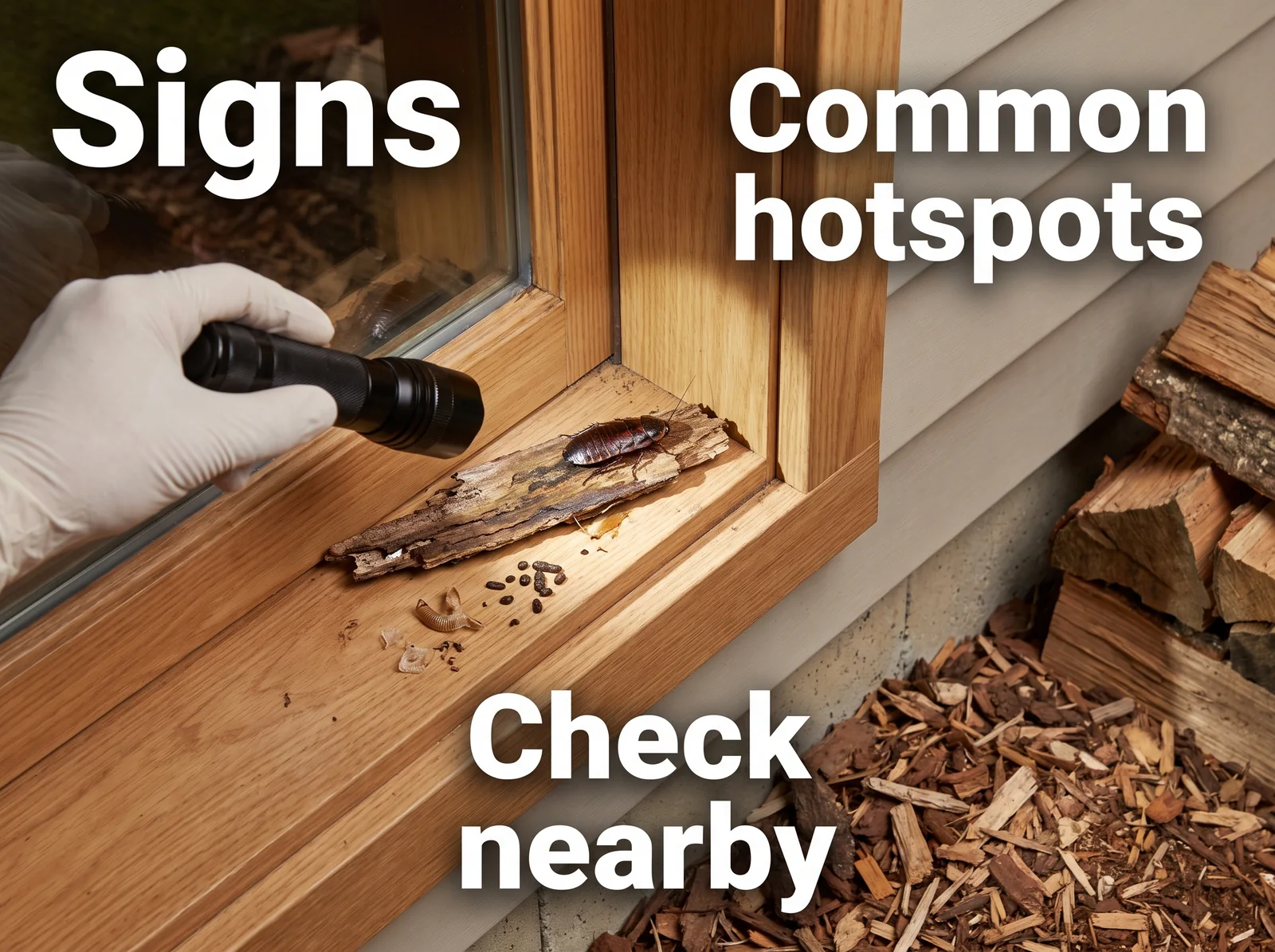
Wood cockroaches look similar to American cockroaches but are smaller and have a flatter, more oval shape. Males have wings that reach close to the tip of the abdomen and can fly short distances, which is why they sometimes show up near porch lights.
Unlike German cockroaches, wood cockroaches don't have two dark stripes running down the back of their pronotum. They also move differently outdoors, often found under loose bark or inside rotting logs rather than clustered in tight groups.
If you're not sure what you're looking at, a photo comparison helps before you decide on next steps. Confirming the species first keeps you from treating for the wrong pest, since sanitation and removal steps for wood roaches are different from steps for indoor-breeding species.
Where do wood cockroaches usually come from?
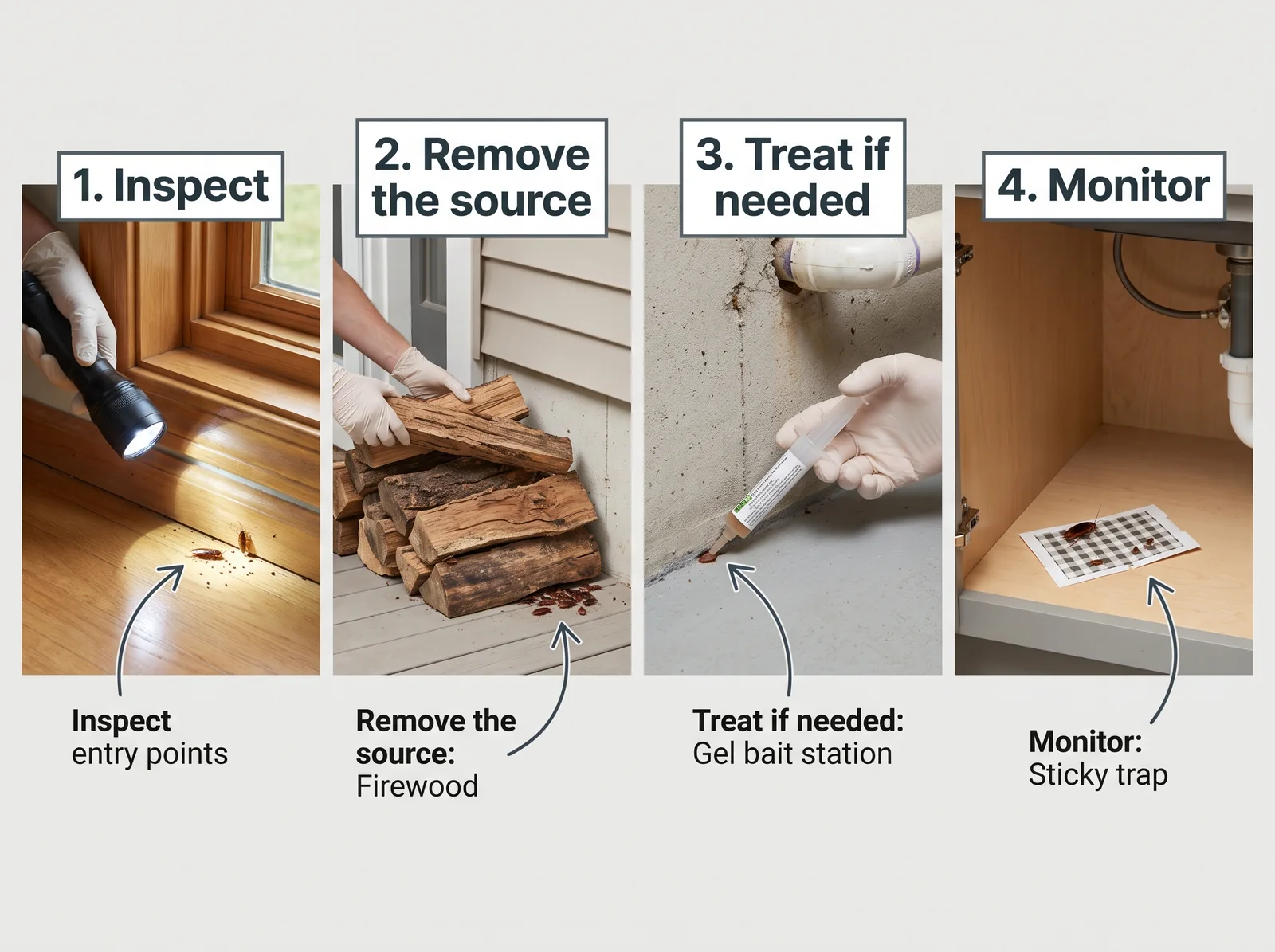
Wood cockroaches live outdoors in wood piles, mulch beds, tree stumps, and under loose bark. They don't seek out kitchens for food the way other roaches do, so an indoor sighting almost always traces back to an outdoor source near your home.
Start your inspection at the perimeter. Look at firewood stacks, especially if they're within a few feet of your foundation or an exterior door. Check mulch beds pushed up against siding, and look under any decorative logs or landscape timbers.
Move inside next and check for entry points that line up with where you saw the roach. Gaps around dryer vents, unsealed utility penetrations, and door thresholds with worn weatherstripping are common ways they get in.
Write down every gap and source you find. This list becomes your action plan for exclusion and removal, and it's the most useful step in the whole process of getting rid of wood cockroach activity long term.
- Firewood and log piles near the foundation
- Mulch or leaf litter touching siding
- Gaps around vents, pipes, and thresholds
- Loose bark or landscape timbers near entry points
What actually gets rid of wood cockroach sightings?
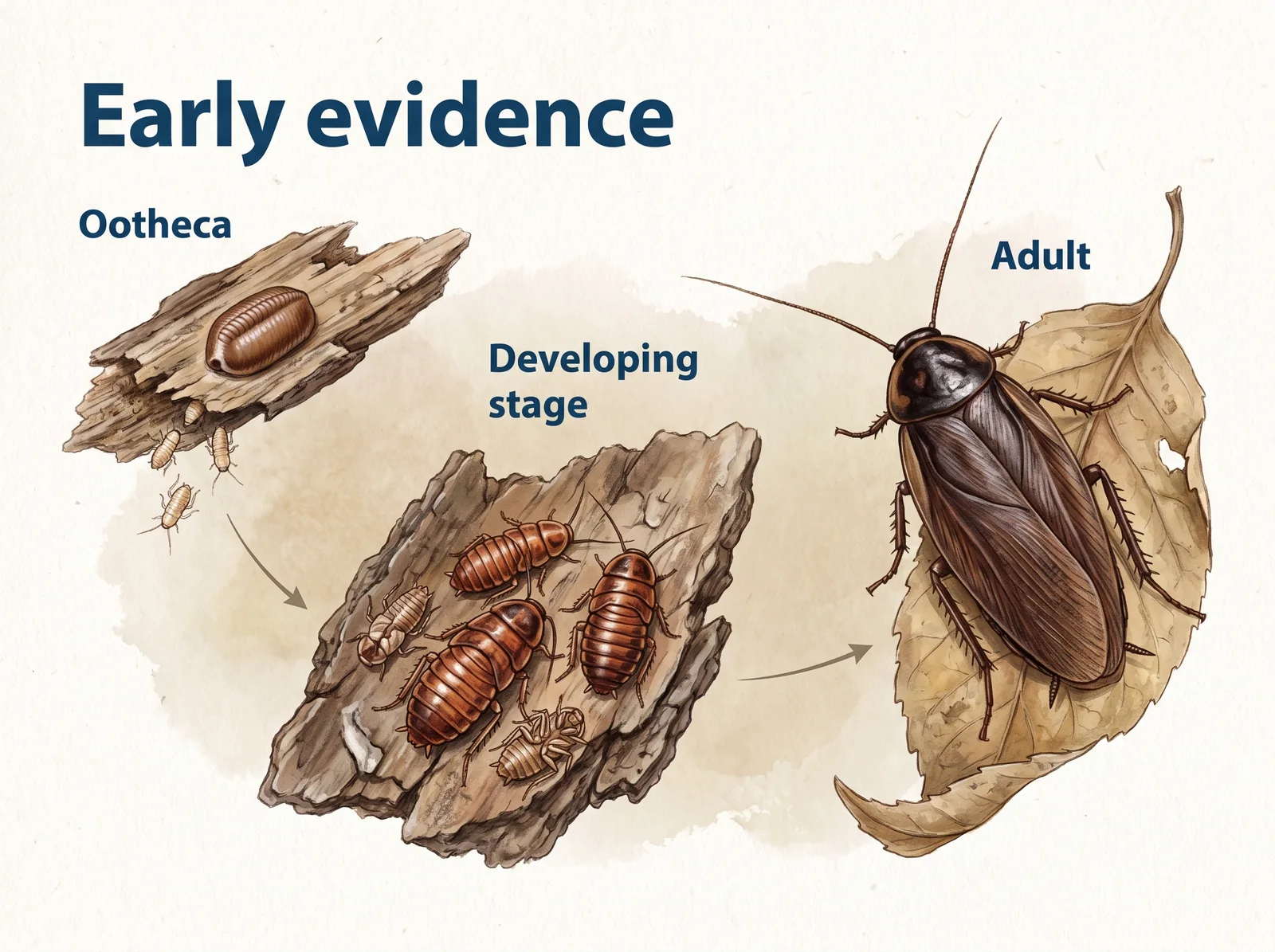
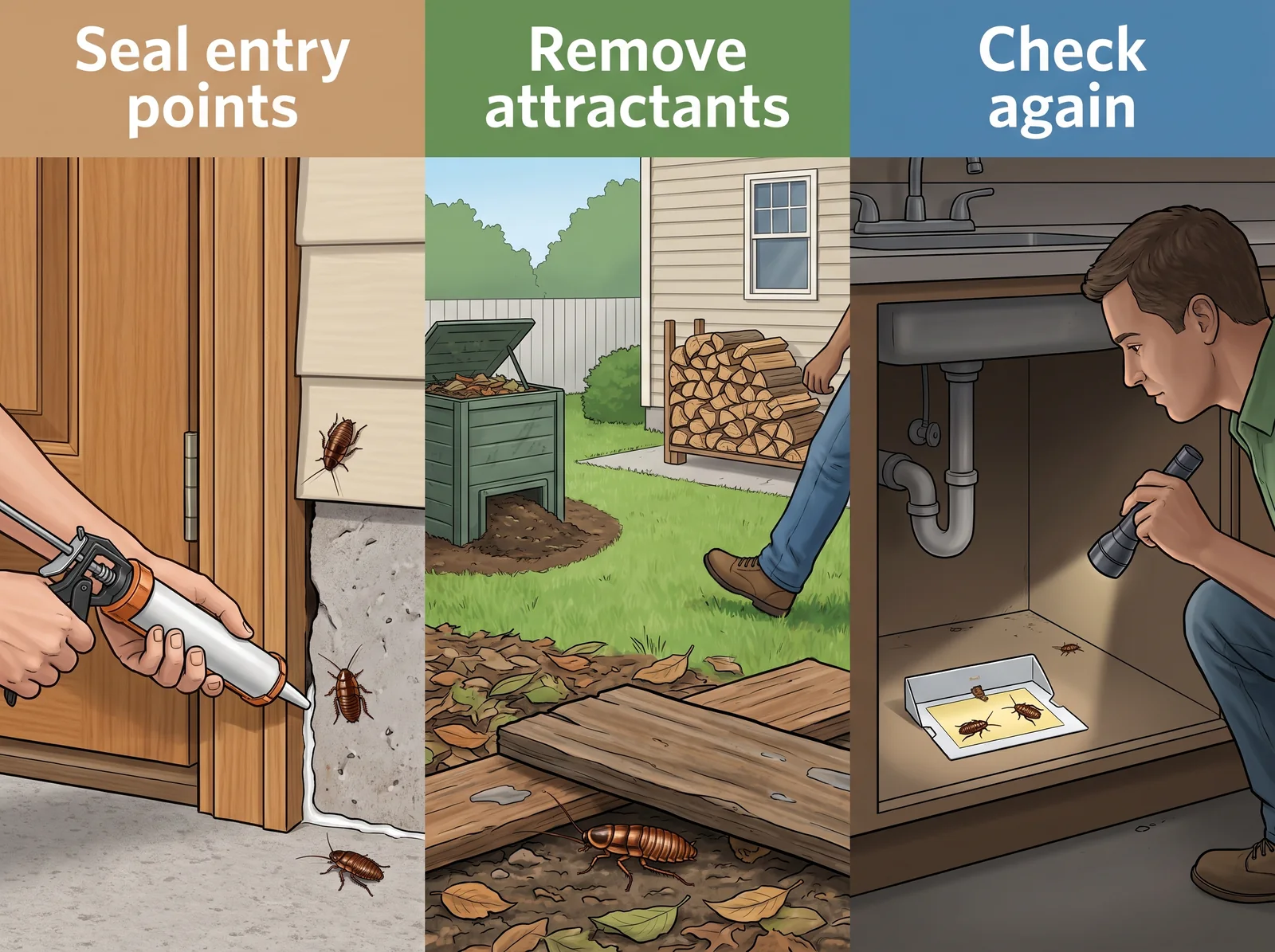
Source removal comes first. Move firewood at least 20 feet from your house and store it off the ground on a rack. This single change often eliminates the main reason wood cockroaches were near your door in the first place.
Next, pull mulch and leaf litter back a few inches from your foundation and siding. Wood cockroaches use that debris as cover, and reducing it makes your home's perimeter far less inviting.
For exclusion, seal gaps with caulk or weatherstripping, add door sweeps where needed, and repair torn screens. These fixes close the specific paths you identified during inspection, which is often enough to stop the problem without pesticides.
If an EPA-registered product labeled for cockroaches and your specific site is needed for a persistent indoor sighting, follow the label exactly and use it only where the label allows. For most wood cockroach situations, exclusion and source removal outside the home solve the issue without any pesticide use at all.
- Move and elevate firewood away from the house
- Pull back mulch and leaf litter from the foundation
- Seal gaps, repair screens, and add door sweeps
- Use pesticides only as a last resort and only per label
How do you know if the problem is solved?
Monitoring tells you whether your fixes worked. Place a few sticky monitoring traps along baseboards near the spots where you saw activity, especially close to doors, windows, and any fireplace or utility opening.
Check the traps every few days for the first two weeks after making changes. A drop in captures or sightings means your source removal and exclusion work is paying off.
If sightings continue at the same rate after two weeks, go back to your inspection notes. You likely missed a gap or an outdoor source, not that the pest is impossible to get rid of.
- Place sticky traps near doors, windows, and utility openings
- Check traps every few days for two weeks
- Reassess your gap list if activity doesn't drop
How do you keep wood cockroaches from coming back?
Prevention is mostly about maintaining the same changes you made during removal. Keep firewood stacked away from the house and off the ground permanently, not just while you're actively dealing with a sighting.
Trim back vegetation and mulch so there's a clear, dry buffer between your soil and your siding. Wood cockroaches prefer damp, shaded ground cover, so reducing that habitat near your home keeps them from wandering closer.
Do a seasonal check of door sweeps, weatherstripping, and window screens each spring, since that's when wood cockroach activity typically picks up. A quick walk-through twice a year catches new gaps before they become entry points.
- Keep firewood elevated and 20+ feet from the house
- Maintain a dry, clear buffer along the foundation
- Recheck seals and screens each spring and fall
Are wood cockroaches a risk to kids or pets?
Wood cockroaches don't bite and aren't known to spread disease the way some indoor-breeding roach species can. Because they rarely establish indoor colonies, the main concern is usually just the surprise of finding one inside.
If you use any pesticide product to address an indoor sighting, keep children and pets out of the treated area for as long as the label specifies. Store any product out of reach and follow storage instructions on the label exactly.
For most households, physical removal with a container or vacuum, followed by sealing the entry point, is enough and avoids any need for chemical treatment around kids or pets at all.
When does it make sense to call a professional?
If you're seeing multiple wood cockroaches indoors on a regular basis despite sealing gaps and removing outdoor sources, it's worth having a licensed pest control professional inspect your property. Recurring indoor sightings can mean a source you haven't found, like a crawl space or wall void.
A professional can also help if you're dealing with a large outdoor population near the home, structural wood damage that might be attracting them, or if you're not confident identifying the species correctly.
There's no downside to getting a second opinion, especially if your own inspection hasn't turned up a clear source after a couple of weeks. A pro can access areas like attics and crawl spaces more thoroughly than a typical homeowner inspection.
Questions you may still have
Do wood cockroaches infest homes like German cockroaches do?
No. Wood cockroaches rarely establish breeding colonies indoors because they need the moisture and organic debris found outdoors in mulch, bark, and rotting wood. An indoor sighting is almost always a single wanderer that came in through a gap rather than a sign of an established infestation, which is good news when you're trying to get rid of wood cockroach sightings.
Why am I suddenly seeing wood cockroaches indoors?
The most common reasons are firewood stored too close to the house, mulch or leaf litter piled against the foundation, or a seasonal increase in activity during spring and early summer. Males also fly toward light at night, so porch lights near an unsealed door or window can pull them indoors.
Can I just vacuum up a wood cockroach and be done with it?
Yes, for a single sighting, vacuuming or trapping it in a container and releasing it outside is usually all that's needed. The more important step is finding and sealing the entry point it used, so you're not dealing with repeat visitors from the same gap.
Do I need pesticides to get rid of wood cockroach activity?
Most cases don't require pesticides at all. Source removal, like relocating firewood and pulling back mulch, combined with sealing entry points, resolves the vast majority of wood cockroach sightings. If a persistent issue remains, use only an EPA-registered product labeled for cockroaches and the specific site, following the label completely.
How long does it take to notice results after sealing gaps?
Most homeowners see a clear drop in sightings within one to two weeks of removing outdoor sources and sealing entry points. Monitoring with sticky traps during this window gives you a concrete way to confirm the change instead of just guessing.